

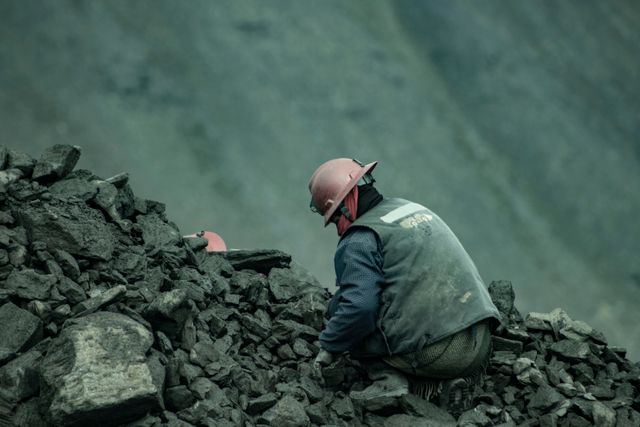
South Africa’s mining industry employs close to half a million people directly and contributes roughly 6–7% of the country’s GDP. Gold and chrome prices are at multi-year highs in 2026, and hiring has picked up across several disciplines as a result. But most conversations with candidates aren’t about whether the mining careers in South Africa exist, they’re about getting in front of the right person.
This guide covers the roles driving demand, the qualifications that genuinely open doors, and from where we sit as recruiters working across the sector daily, the parts of the job search most guides leave out.
Why South Africa Still Matters to Global Mining
Few countries let you build a career across this much of the commodity spectrum. The Bushveld Complex alone holds most of the world’s platinum group metals and a huge share of its chrome, anchoring employment across Rustenburg, Steelpoort and the Limpopo platinum belt. Mpumalanga’s coalfields still power much of the country’s electricity generation and export tonnage, and the Northern Cape has become the place to be for manganese and iron ore. Gold, past its peak production years, still supports deep-level operations and an ultra-deep mining skills base that barely exists anywhere else.
Here’s the part that doesn’t always make the headlines: the constraint on hiring right now isn’t a shortage of mineral wealth. It’s policy certainty, rail capacity and the cost of power. The Minerals Council has been vocal about all three through 2026 and in our experience these shape which projects get greenlit and which roles get created, more than commodity prices do.
The Mining Career Paths With the Most Demand Right Now
Mining Engineering. Still the backbone discipline. What separates a mining engineer with options from one without usually isn’t the university it’s underground production exposure before their late twenties, and starting the GCC clock early. The certificate takes years; the sooner you’re eligible to sit it, the sooner it stops capping your progression.
Geology and Exploration. Majors want people already proven at junior and mid-tier explorers, but junior explorers are where that proving-ground experience actually happens. We usually tell graduates to take the junior-company role even when the major looks better on paper: the fieldwork responsibility comes faster, and it shows.
Metallurgy and Processing. Process plants are where beneficiation strategy gets executed, which is part of why South African metallurgists are some of the most sought-after in the world. Candidates who’ve run a plant through a genuine upset, not just steady state, stand out immediately to mining houses.
Mine Management and Operations Leadership. Mine managers hold a legal appointment under the Mine Health and Safety Act, which makes a GCC the entry ticket rather than optional paperwork. We see strong operational candidates stall for years because they didn’t start their GCC timeline early enough.
Health, Safety and Environment. HSE has stopped being a compliance afterthought. Mining houses are investing seriously in predictive safety systems as part of a genuine push toward zero-harm operations, opening up senior HSE career paths that barely existed a decade ago.
Maintenance, Electrical and Mechanical Trades. Underestimated by almost everyone outside the industry. Legally appointed engineering managers; electrical, mechanical, instrumentation; need their own GCC, and remote and underground sites are chronically short of experienced artisans willing to work shift rosters. If you’re willing to go where the work is, this is one of the least competitive routes into a well-paid mining career.
Qualifications and Certifications That Actually Matter
The GCC. The Government Certificate of Competency is the statutory qualification behind any legal appointment on a South African mine; mine manager, engineering manager and several supervisory roles all require it. It’s earned through examination, not experience alone, and the exam cycle is the biggest bottleneck we see in candidates’ timelines.
ECSA registration. For engineers, registering with the Engineering Council of South Africa; as a Professional Engineer, Technologist or Certificated Engineer; signals your competence has been independently assessed against a national standard. For GCC holders, the Professional Certificated Engineer category is worth understanding early, not as an afterthought.
SAQA recognition. If you qualified outside South Africa, the South African Qualifications Authority evaluates your credentials against the local framework. It’s a standard step for the expatriate and diaspora candidates we place regularly, and it’s worth starting well before you have an offer in hand, not after.
What Mining Careers in South Africa Actually Pay
Search online and you’ll find wildly different numbers for the same job title, mining engineer salaries quoted anywhere from under R250,000 to well over R1 million a year. That’s not bad data, it’s mixed data: graduate planners, mid-career production engineers and senior GMs all get bundled under one job title.
A more realistic read: graduate and early-career engineers typically start around R200,000–R350,000. With five-plus years’ experience, a GCC and proven production accountability, R450,000–R750,000 is a reasonable band. Senior managers, specialist metallurgists and scarce-skills roles like rock engineering regularly clear R1 million once remote-site allowances, shift pay and performance bonuses are layered on top, all standard in this industry, and rarely reflected in the headline number quoted.
How Senior Mining Roles Actually Get Filled
Most aren’t advertised. This is the least intuitive part of the job search for anyone outside the industry: the more senior the role, the less likely it is to appear on a job board. General Manager (GM), technical director and executive-level appointments are overwhelmingly filled through direct search and existing networks, not public postings.
Specialist recruitment closes that gap. It’s why mining recruitment in South Africa works differently to most other sectors, relationships between recruiters and mining houses often exist years before a specific vacancy does. If you’re serious about a move at Mine Manager level or above, those relationships get you in front of opportunities a job board never will, whether you’re looking in South Africa or considering mining jobs in Zambia and the DRC, where many of the same networks operate.
Frequently Asked Questions
What are the most in-demand mining careers in South Africa? Mining engineers, geologists, metallurgists, mine managers and rock engineers remain consistently hard to fill, alongside growing demand in automation, data and environmental compliance roles.
What qualifications do I need for a mining career in South Africa? Engineers typically need a BSc or BEng plus ECSA registration; mine managers and mine overseers need a GCC; trades need the relevant artisan certification. It usually takes longer than people expect, so start early.
Are there opportunities for expatriates and foreign nationals? Yes, particularly in scarce-skills areas like rock engineering and specialist metallurgy, and at executive level. SAQA recognition and the right work permit are the two things to sort out first.
How do I access senior-level mining opportunities? Register as a candidate with a specialist mining recruitment consultancy and build the relationship before you need it. Most senior roles move through networks, not applications.
If you’re building a mining career in South Africa, or figuring out your next move within one, speak to a CA Mining consultant about the roles you’re not seeing advertised or register as a candidate so we can reach out when the right one comes up.
