

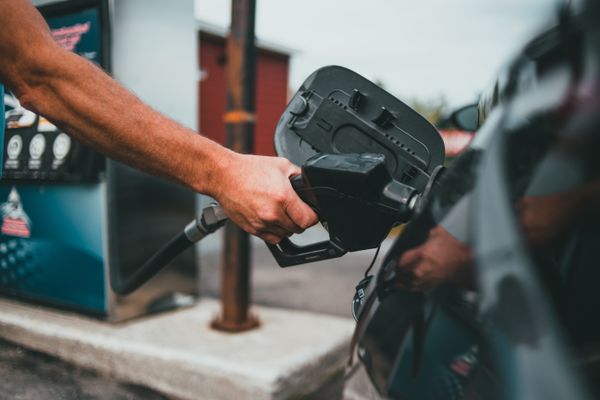
Your car and pocket aren’t the only things that are getting affected by the global fuel increases. The mining industry also runs on diesel. It powers the haul trucks that carry ore out of the pit, the loaders and excavators that feed them, the drill rigs, and the backup generators that keep remote sites running when the grid fails. So when we have fuel price increases, mining feels it quickly and across almost every line of the cost sheet. 2026 has been a stark demonstration, with South African diesel prices swinging sharply for much of the year. This article looks at why fuel matters so much to miners, what recent price movements have meant and how the industry is adapting.
Why diesel is so deeply embedded in mining
Surface mining is a heavy-haulage business. Diesel can account for as much as 30% of a mine’s operating costs, and haul trucks are the largest single consumer of energy in an open-pit operation. Research from Queen’s University found that fuel use in high-tonnage mining trucks makes up roughly 32% of the energy consumed in an open-pit mine and can contribute up to 22% of operating costs.
Published estimates vary with the commodity, the mine design and the haul distance. Some industry sources put fuel’s share of total operating costs as high as 30 to 50 percent, though those figures come from a fleet-software vendor and should be read as an upper bound. One academic analysis found that moving rock in pits accounts for 26% to 50% of the total operating costs of surface mines, and that diesel makes up as much as 70% of a truck powertrain’s lifecycle cost.
The exact percentage depends on the site, but the conclusion is the same. Diesel is one of the biggest costs a mine carries, and it is one of the hardest to control. Underground operations are not exempt. Mining in South Africa relies on extensive diesel-powered equipment both above and below ground and many operations also run diesel generators to cope with electricity supply problems.
What Fuel Price Increases in 2026 show
The year’s price swings show how exposed the sector is. In January, South Africa opened the year with major fuel price relief, including one of the most significant monthly diesel decreases in several years. That relief did not last. From 1 April 2026, diesel rose by between R7.37 and R7.51 per litre, one of the sharpest monthly increases in recent history. Engineering News linked the surge to the war involving the US, Israel and Iran and its effect on global oil markets, which pushed the Gauteng wholesale diesel price to R26.11.
Prices kept climbing. On 6 May, South Africans woke up to record fuel prices, with a litre of 50ppm diesel costing R31.38. The country’s exposure is partly structural: it imports its diesel from India, Oman, the United Arab Emirates, Bahrain and Saudi Arabia. That makes local prices sensitive to anything that disrupts Middle Eastern supply routes.
Relief came in June, when diesel was due to fall by as much as R3.25 per litre, helped by weaker global demand for middle distillates such as diesel and paraffin. By August, though, diesel users faced another increase of up to R1.38 per litre, expected to push up operating costs in logistics, agriculture and mining. Because fuel prices are adjusted monthly, mining companies should check the latest adjustment before finalising any budget.
The lesson for miners is volatility more than any single price level. Costs that swing by several rand per litre from one month to the next make budgeting, contracting and forecasting far harder.
How fuel price increases hit mining operations
Margin pressure- Mining companies are price-takers. They sell into global commodity markets and cannot add a fuel surcharge to a tonne of iron ore or platinum. As one energy industry commentator put it, mines, manufacturers, logistics operators and farms cannot pass every fuel price shock on immediately, so higher fuel costs eat into margins and make pricing contracts harder to manage. Low-margin and marginal operations feel this first, because a fuel price spike can quickly move a mine from marginal profit to loss.
A slow-moving pricing mechanism that magnifies shocks- South Africa adjusts fuel prices every month. According to one analysis, this means global shocks are carried forward rather than reflected immediately, which can amplify price movements in later months. A mine may therefore see the pain arrive in stages, which complicates short-term planning.
Rising logistics costs- Fuel does not only affect what happens inside the mine gate. Moving product to port or processing plants adds a second layer of exposure. Business Unity South Africa has warned that diesel accounts for between 35% and 55% of road freight operating costs, which means higher fuel prices lift transport costs for consumables going in and for commodities going out.
Contractor and supply chain costs- Many mines depend on contractors for drilling, blasting, hauling and maintenance. When contractors’ fuel costs rise, they typically seek rate adjustments or renegotiate terms, which spreads the effect through the supply chain.
Wider economic effects- Higher diesel prices also feed inflation and affect the cost of living. This brings added wage pressure and tougher labour negotiations, which add to costs the mining sector already carries.
How the industry is responding
Mining companies cannot control the oil price, but they can control how much fuel they burn and where their energy comes from.
Operational efficiency- There is substantial room to improve. Research cited in the Queen’s study found that cutting ramp grade by 1% can save up to 1.6% of fuel per haul cycle, while overloading a truck by 20 tons increases its fuel consumption by about 2.7%. A separate study of surface haulage reported that a practical method for analysing and prioritising fuel-related variables cut diesel consumption by 10%, without large investments or long timelines. Idling is another target. Fleet-management vendors estimate that haul trucks idle for around 35 to 40 percent of operating hours, wasting an estimated 100,000 to 150,000 litres of diesel per truck each year. These are vendor estimates, but they point to why telematics and operator training are a popular first step.
Electrification- Battery-electric haulage is moving from pilot projects towards serious consideration. A total-cost-of-ownership analysis of 150-tonne trucks found that electric models could cut fuel costs by 60% to 65% and maintenance costs by 25% to 35% compared with diesel equivalents. These are modelled results and the economics vary by site, but they show why the discussion is gaining ground, especially when diesel prices spike.
Solar and storage- Hybrid energy systems are attracting growing interest. According to Sungrow’s regional head, once a solar and storage system is installed, its generation costs are fixed, which shields operations from fuel price shocks. For remote sites with high energy demand, a mix of solar, storage and conventional power can maintain operational continuity while lowering fuel costs and emissions. This comes from a vendor, so it is an interested view, but the logic of fixing a large energy cost is sound.
A word on alternative fuels- Switching to lower-carbon liquid fuels is not a quick fix. One energy research consultancy estimates that some lower-carbon fuels cost around five times as much as diesel, which would add materially to the cost of mined commodities.
What this means for mining talent
Fuel price pressure changes what mining companies need from their people and we see this in our work at CA Mining. Mines under cost pressure value professionals who can find efficiencies: fleet and maintenance planners, mine planning engineers, energy and sustainability specialists, and data analysts who can turn telematics into savings. As operations explore electrification and renewable power, demand is also growing for electrical engineers and project managers with energy transition experience. For professionals in these fields, volatile fuel prices increase their value to employers.
In Conclusion
Fuel price increases do more than add a line to the budget. They squeeze margins that miners cannot easily pass on, raise logistics and contractor costs, and make planning harder when prices swing from month to month, as they have in 2026. The sector’s response, a mix of tighter fuel discipline, electrification and renewable energy, is a response to the lesson that dependence on a single volatile input is a strategic risk.
For mining companies, the opportunity is to turn today’s pressure into long-term resilience. For the professionals who help deliver that, it is a good time to be building these skills.
