

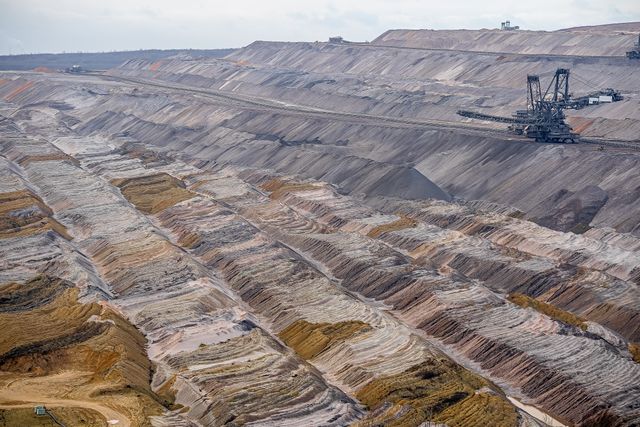
Africa holds close to a third of the world’s mineral reserves, produces roughly 40% of global gold, and controls up to 90% of the world’s chromium and platinum, according to United Nations estimates. That wealth isn’t spread evenly. A World Bank report published in October 2025 singled out 26 of the continent’s minerals as central to the global clean-energy transition, and five countries hold an outsized share of that endowment; the largest known reserves on the planet of cobalt, platinum, bauxite, lithium, and diamonds. Ranked by the scale and strategic weight of what’s still in the ground, these are five of the richest countries in Africa’s mineral economies in 2026.
1. Democratic Republic of Congo
The DRC’s untapped mineral wealth is commonly valued at around $24 trillion, more than 350 times the country’s roughly $66 billion GDP. It holds an estimated 54% of the world’s known cobalt reserves and produced about 220,000 of the 290,000 metric tons of cobalt mined worldwide in 2024, more than 70% of global supply. It’s also Africa’s largest copper producer: national output is forecast to grow 6% in 2026 to roughly 3.4 million tonnes as the Kamoa-Kakula complex recovers from 2025 flooding and expands toward 600,000 tonnes a year of capacity. Add sizeable reserves of diamonds, gold, tin, tantalum, and the emerging Manono lithium project, and the DRC remains the continent’s undisputed number one. A four-month cobalt export ban imposed in February 2025 was replaced with a quota system that October; a reminder of how much of the world’s battery supply chain now runs through decisions made in Kinshasa.
2. South Africa
South Africa holds an estimated 63,000 of the world’s 76,000 metric tons of platinum-group metal reserves, around 83% of the global total. It’s the world’s leading platinum producer, mining about 120 metric tons in 2024 and accounting for more than a fifth of global platinum exports in 2023. Add major gold reserves, roughly a quarter of the world’s manganese production, close to 40% of world chromite output, and a long-established diamond industry, and few African economies can match that breadth. Mining still contributes about 7.5% of GDP and employs some 477,000 people, with platinum-group operations the single largest employer in the sector. Extracting it isn’t easy, several of the world’s deepest gold mines are here but South Africa’s reserves are also among the best-documented on the continent.
3. Zimbabwe
Zimbabwe holds Africa’s largest lithium reserves, by some estimates, the world’s fifth-largest; alongside an estimated 2.8 billion tonnes of platinum-group metals (the world’s second- or third-largest deposit, depending on the source) and roughly 10 billion tonnes of high-grade chromium ore. Lithium exports reached 1.128 million tonnes of spodumene concentrate in the year to December 2025, up 11% on the year before, most of it shipped to China for battery-grade processing. In February 2026, the government suspended exports of all raw minerals and lithium concentrate, pushing miners toward processing locally rather than shipping out unrefined ore. Mining already accounts for roughly 14.5% of GDP and 75% of export earnings, with gold, platinum, diamonds, chrome, and coal rounding out a sector the Reserve Bank of Zimbabwe valued at $5.9 billion in exports in 2024.
4. Guinea
Guinea holds the world’s largest bauxite reserves, estimated at 7.4 billion tonnes, and is already the world’s second-largest bauxite producer, mining 123 million tonnes in 2023 for about 22% of global output. Mining accounts for 21% of GDP and more than 90% of exports. The bigger story for 2026 is Simandou: the $23 billion project holds the world’s largest untapped high-grade iron ore deposit, an estimated 3 to 4 billion tonnes at roughly 65% iron content. Getting it to port required its own mega-project; roughly $20 billion invested in a 650-kilometre rail line, bridges, tunnels, and a new deep-water port along Guinea’s Atlantic coast. Exports began in November 2025, and full capacity of around 120 million tonnes a year by 2030 could push Guinea into the ranks of the world’s top three iron ore exporters. With gold, diamonds, and undeveloped graphite, manganese, and uranium deposits on top of that, Guinea’s mineral wealth is only starting to be tapped.
5. Botswana
Botswana holds the world’s second-largest diamond reserves, at roughly 250 million carats, and is the biggest diamond producer by value and the second-largest by volume, behind Russia. Diamonds account for around 80% of exports and about a quarter of GDP. A renegotiated 10-year sales agreement with De Beers, signed in 2025, lifts the government’s share of Debswana’s sales from 25% to 30% immediately and to 40% within five years, with an option to reach 50-50 after that. The timing matters: Debswana cut production 27% in 2024 and trimmed output by a further 16%, to around 15 million carats, in 2025 as the diamond market slumped. The company is nonetheless spending an estimated $6 billion to take its flagship Jwaneng mine underground, extending its life to 2054. Officials point to early signs of a 2026 recovery in diamond sales.
What It Means for the Sector
Four of these five economies: the DRC, Zimbabwe, Guinea and South Africa; supply minerals central to batteries, renewable energy, and steel decarbonisation, which is why capital keeps flowing in despite price swings and policy shifts. Just outside the top five, Zambia and Ghana are worth watching too: Zambia is Africa’s second-largest copper producer, targeting a rebound to 1 million tonnes in 2026 as prices hover near $10,500 a tonne, and Ghana remains the continent’s largest gold producer. For mining professionals, all of this points to sustained demand for exploration, processing, and project-development skills across the copper belt, the platinum belt, and West Africa’s new iron-ore corridor. These reserves run into the trillions of dollars. Turning them into lasting, broad-based prosperity remains the open question for the decade ahead.
Turning Mineral Wealth Into Opportunity Requires the Right People
Africa’s mineral resources represent enormous potential, but unlocking that potential depends on more than geology and investment. Successful projects need experienced leaders, technical specialists and operational talent who understand the realities of working across Africa’s diverse mining markets.
At CA Mining, we specialise in connecting mining companies with the people they need to develop, operate and grow their projects across Africa and internationally. From executive search and specialist recruitment to talent advisory and project-based support, our team understands the skills, experience and leadership capabilities required across the mining value chain.
Looking for mining talent in Africa? Talk to CA Mining about your next hire or project.
